Illuminating the past and informing the present with ancient DNA
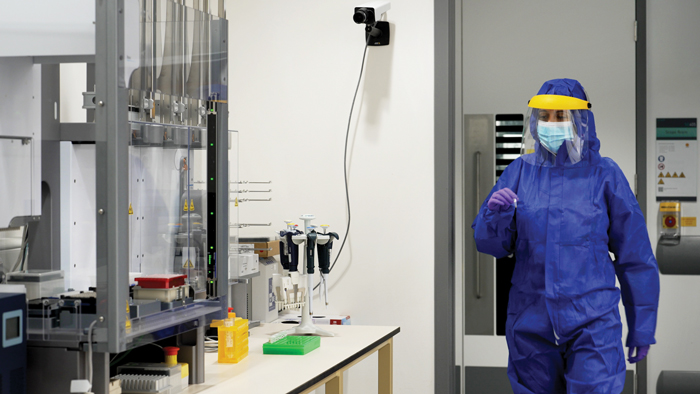
Pioneering research in the Francis Crick Institute’s Ancient Genomics Lab is boosting our understanding of past populations, people, and pathogens. Carly Hilts spoke to Tom Booth and Kat Nilsson and explored a new exhibition sharing some of these findings.
In 1801, William Cunnington – a prolific excavator of Bronze Age barrows on Salisbury Plain – investigated a particularly impressive burial mound at Upton Lovell, about 12 miles (20km) west of Stonehenge. The near-complete skeleton of its primary occupant was surrounded by an extraordinary array of artefacts, including multiple stone axes (some of exotic materials) and particularly unusual items, such as a pouch decorated with boars’ tusks and a set of four cups crafted from fossil sponges, which were accompanied by a bronze awl and have been interpreted as a possible tattooing kit. Most strikingly, this individual was buried in some kind of cloak or garment decorated with numerous pierced animal bones – a design that would have created a very distinctive impression (and sound) when its wearer moved.
If this intriguing ensemble hints at this person holding a special role within their community, then that status could have been connected to the ‘tool kit’ of stone and copper-alloy implements that had also accompanied them to the grave. These were hammers, anvils, and smoothing tools used for metalworking (specifically, goldworking, more recent analysis has revealed; see CA 396), a craft that in c.1800 BC, when this individual was buried, is thought to have been regarded with particular reverence. The ability to create shimmering molten metal and then transform it into solid objects must have seemed almost magical to unfamiliar observers, and it has long been suspected that metalworkers held an elevated status in Bronze Age Britain. The Upton Lovell individual, with their extravagant grave goods, may have been a chieftain or a religious leader, Cunnington reasoned – and he assumed that this high-status person was male.
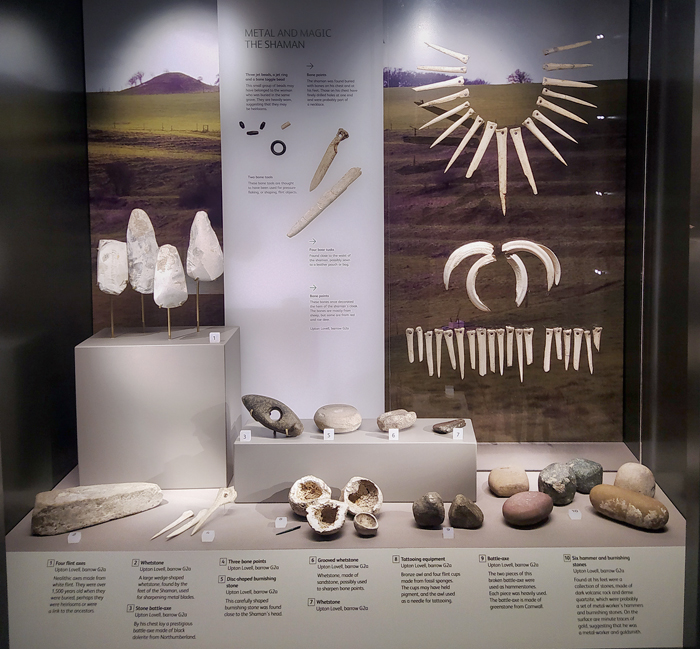
This perception of the ‘Upton Lovell Shaman’ persisted for more than 200 years, and, in the Wiltshire Museum in Devizes, displays of the artefacts have long been accompanied by an image of a bearded man. Now centuries of stereotypes about Bronze Age gender roles have been turned on their head, as ancient DNA (aDNA) analysis at the Francis Crick Institute in London has revealed that this magnificently adorned metalworker was, in fact, female. This research comes after the burial’s re-excavation by Dr Colin Shell of Cambridge University, and recovery of the human remains, in 2000. New analysis also showed signs of arthritis in the woman’s right wrist but not in her left, speaking of regular, repetitive tasks using that hand and suggesting that the tools buried with her were not simply symbolic of her social status, but a real reflection of the skills that had earned the respect of the community who buried her in such style.
From early extractions of aDNA in the 1980s, to game-changing advances in genetic sequencing in the 2010s, such research is becoming an increasingly powerful tool in archaeological investigations, revealing ever-more precise and personal details about people and populations from the past. When applied to jumbled human remains within a Neolithic chambered tomb, or apparently deliberately grouped graves in a cemetery, aDNA analysis can tease out biological relationships (or their absence) and help to reconstruct long-forgotten family trees and social structures (CA 298 and CA 384). They can also reveal insights into an individual that are invisible in the way they were laid to rest – such as the young girl buried at Updown, near Eastry, Kent. She was interred in typical Anglo-Saxon style, with nothing to mark her out as different from anyone else in the cemetery, but she later proved to have West African ancestry (CA 392).
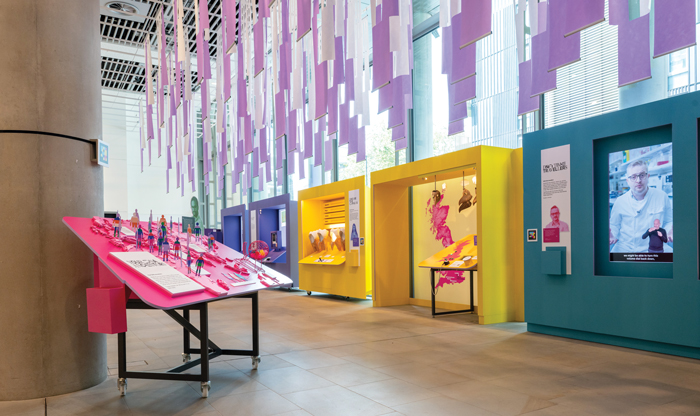
Pioneering work within this field is currently being undertaken at the Francis Crick Institute, Europe’s largest biomedical research institute, where over 1,500 scientists are currently working in various disciplines to advance our understanding of all kinds of biological processes. Some of the latest discoveries made by their Ancient Genomics Lab team are presented in We Go Way Back, an illuminating new exhibition that opened at the Crick in July. Its thoughtfully conceived displays combine interactive puzzles and multimedia aspects to examine ideas of connectedness and share recent findings, some of which we will explore here.
ANCIENT OUTBREAKS
When sampling archaeological human remains for aDNA, scientists are also able to identify pathogen DNA, revealing the diseases that were present in a person’s body when they died. The bacterium Yersinia pestis, for example, is responsible for plague, and analysis of cases identified at sites scattered across Britain and across history is greatly enhancing our understanding of this disease beyond the infamous outbreaks in the 14th century – particularly in periods for which we do not have written records.
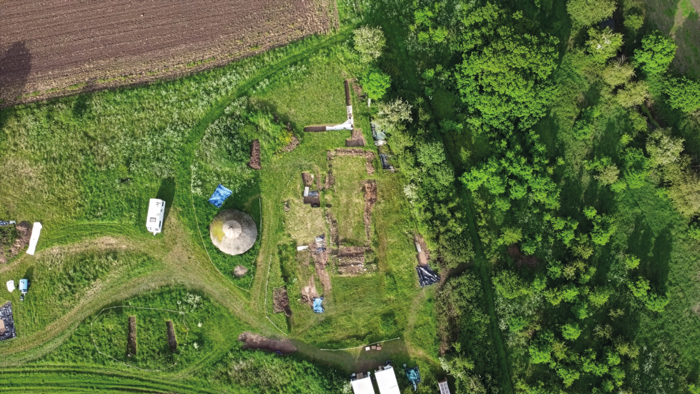
Plague is now known to have been in Britain thousands of years before the Black Death, thanks to aDNA evidence from a mass burial at Charterhouse Warren in Somerset, and the Levens Park ring cairn in Cumbria, bearing witness to a previously unknown epidemic dating back 4,000 years (CA 401). While it was already known that plague was present in Neolithic and Bronze Age continental Europe, with known cases spanning c.5000-2500 BC, this is the earliest known evidence of it affecting communities in Britain. Given that it is seen at two broadly contemporary sites that lie hundreds of miles apart, moreover, this does not appear to have been an isolated incident.
Such insights raise questions about the affected people’s burial practices, too. The Charterhouse Warren individuals come from an unusual mass-burial site where the dismembered remains of at least 40 men, women, and children had been thrown into a deep natural shaft (CA 420). Two children tested positive for plague – might this group have been subjected to such brutal treatment because they were seen as dangerous in the midst of an infectious outbreak? The Levens Park individual – a woman aged 35-45 years old – was buried in a much more conventional way, however: laid to rest in a plank-lined grave with sherds of Beaker pottery, and sharing the cairn with three other individuals, the fact that she was infected with plague does not seem to have invited stigma.
Interesting details have emerged from the early medieval period as well. Written evidence speaks of the Justinianic pandemic that ravaged Eurasia in the later 6th century, but while contemporary accounts vividly describe its devastating impact across continental Europe and the Near East, none suggest that this plague reached Britain. Genetic analysis of individuals from early Anglo-Saxon cemeteries like Breamore in Hampshire and Edix Hill in Cambridgeshire tell a different story, however, with the presence of Yersinia pestis in some skeletons offering a possible explanation for why some sites of this period have an unusual number of richly furnished multiple burials, as if many members of a previously thriving settlement had died in a short space of time (CA 353 and CA 433).
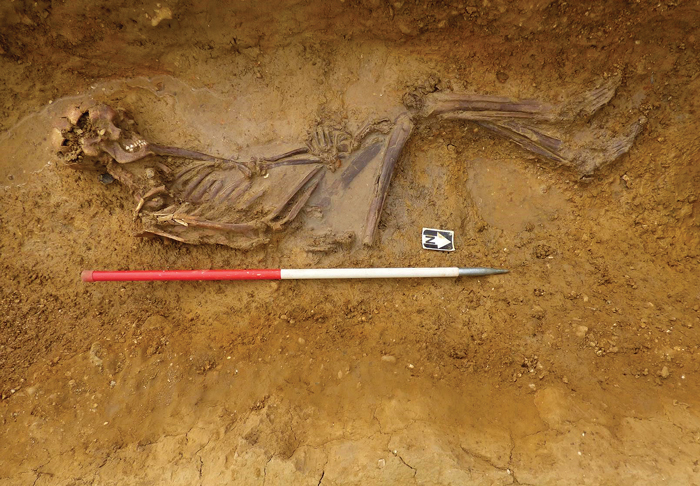
Finally, analysis of human remains buried in a 13th-century chapel at Poulton, Cheshire, have revealed not only a previously unknown case of plague, but a poignant story of a family tragedy. When examining the skeletons of two children, their DNA revealed that they were brothers, and that one was positive for plague. As pathogenic DNA degrades quickly, it is possible that both boys had succumbed to this disease, which may have prompted their joint burial.
This is an extract of an article that appeared in CA 438. Read on in the magazine, or click here to read it online at The Past, where you can read all of the Current Archaeology articles in full as well as the content of our other magazines, Current World Archaeology, Ancient Egypt, and Military History Matters.